

Appendix I – Albinoni’s Adagio: History, Criticism, Versions
🔹 Brief History and the Role of Giazotto
The Adagio in G minor, universally known as Albinoni’s Adagio, does not in fact belong to the Venetian composer Tomaso Albinoni (1671–1751).
It was the Italian musicologist Remo Giazotto who published it in 1958, claiming to have reconstructed the piece from a fragment of a figured bass attributed to Albinoni and discovered among the ruins of the Dresden library, bombed in 1945.
Music historians, however, generally consider the work to be largely an original composition by Giazotto, written in a Baroque style as an homage to his favorite composer.
The piece became famous as the Adagio in G minor for strings and organ, and today it is one of the most recognizable works mistakenly associated with Albinoni.
🔹 Critical Reception
The Adagio has often been criticized for being “too Romantic” and insufficiently Baroque.
Nevertheless, its emotional intensity has made it beloved by audiences, especially in the world of cinema (from Paths of Glory to Manchester by the Sea).
It stands as a perfect example of how nostalgia for the Baroque was reinvented in the 20th century.
🔹 The Miriam Stockley Version
In the 1990s, with the rise of the “neo-classical crossover” genre, the Adagio was also reworked into sung versions.
Among the most famous is that performed by South African soprano Miriam Stockley, already known as the lead voice in Karl Jenkins’s Adiemus projects.
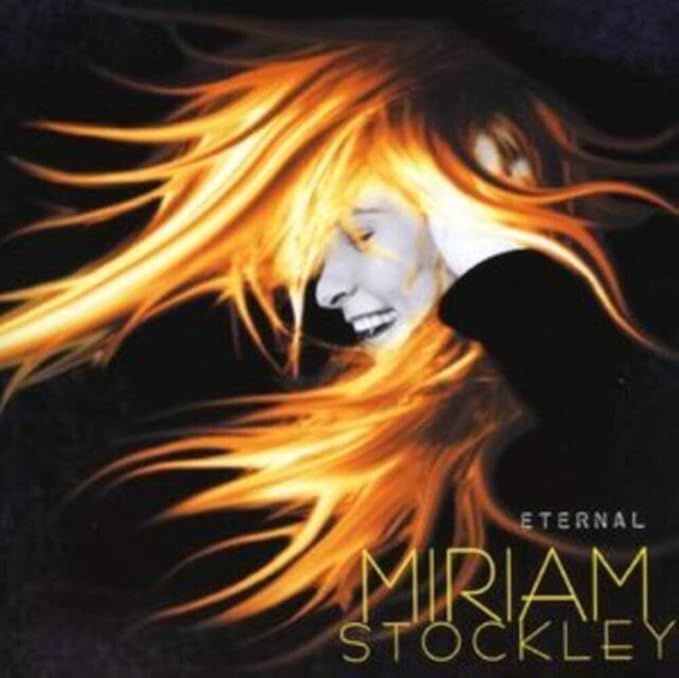
In this adaptation, Giazotto’s melody was overlaid with a romantic Italian text, filled with images of love and loss (“Tu, donami conforto / Soffro quando non l’ho accanto…”).
The text has no historical or Baroque roots: it is a contemporary invention, with no parallel translation into Latin or any other language, created to give voice to the universal emotion evoked by the music.
Stockley’s luminous and ethereal timbre turned this version into a small classic in its own right, bridging Giazotto’s Baroque-inspired invention with the popular musical language of the late 20th century.
🔹 Analysis of the Text
Excerpt from the text (Stockley version):
“Soffro quando non l’ho accanto
Voglio esser sempre con lui
Due cuori da non separar mai
Tu notte, non farlo più:
Smarrir nei miei sogni!
Cerco la luce
E corro fuori da te
A ritrovar la mano che
Vivere mi farà,
Vivere mi farà,
O forse morir, non so!”
The text is unmistakably late-Romantic in tone:
- Theme of comfort and absence: “Tu, donami conforto / Soffro quando non l’ho accanto.”
- Indissoluble union: “Due cuori da non separar mai.”
- Dialogue with the night (a metaphor for pain and loss).
- Ambiguity between life and death: “A ritrovar la mano che / vivere mi farà, / o forse morir, non so.”
This kind of writing has nothing Baroque about it: it is a contemporary invention, created to amplify the popular emotional response to the Adagio.